Blockchain Can Help Resolve the Strait of Hormuz Dispute | UN Blockchain Week
Iran maintains sovereign rights over the Strait of Hormuz, while the world needs reliable transit. Blockchain technology offers a neutral, transparent framework to manage security, contributions, and international cooperation — moving beyond unilateral tolls and protection money demands.

UN Blockchain Week
Editorial Team
Policy Analysis • Maritime Governance • Blockchain
How transparent, rules-based technology can move beyond unilateral tolls and protection money toward verifiable cooperation.
By Guest Contributor • July 13, 2026The International Maritime Organization (IMO) has stated there is no legal basis for mandatory tolls simply for transiting the Strait of Hormuz. Yet Iran maintains that significant portions of the strait — particularly the northern lanes lying within roughly 10 miles of its shoreline — give it the sovereign right to regulate passage and seek compensation for security and use of its waters.
President Trump has demanded the United States receive the equivalent of 20% of cargo value for providing naval protection. The result has been heightened tensions, ship attacks, U.S. strikes, and rising global oil prices.
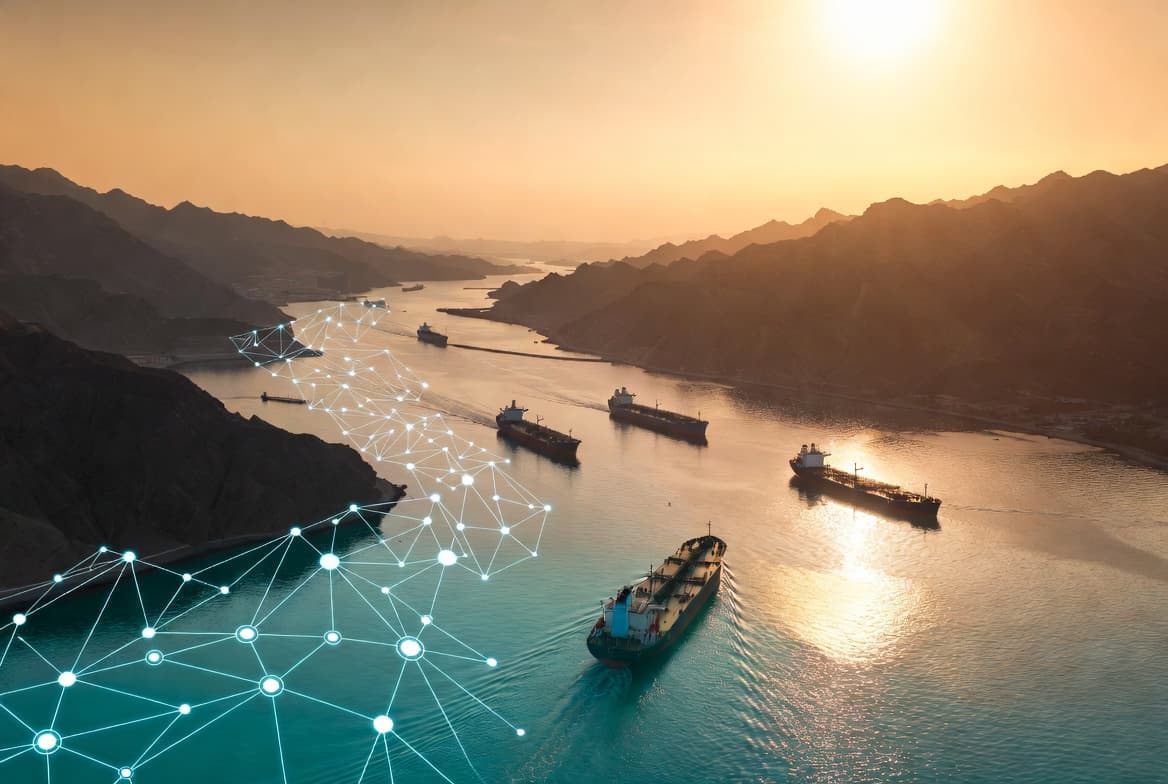
This is a clash of competing interpretations: Iran’s assertion of control over waters near its coast versus the international community’s interest in unimpeded transit through a chokepoint that carries roughly 20–25% of global seaborne oil trade.

The Limits of Unilateral Approaches
Unilateral toll demands, selective blockades, and military responses are proving ineffective at delivering long-term stability. Temporary agreements have repeatedly collapsed. Neither Iran’s legitimate security concerns near its coastline nor the global economy’s need for reliable energy flows are being adequately addressed through traditional power politics.
Blockchain as a Neutral, Practical Solution
Blockchain technology offers a practical path forward. A permissioned blockchain platform — coordinated by the IMO or a neutral multi-stakeholder group — could create transparent, verifiable rules that respect both Iran’s geographic position and the need for stable international transit.
Key elements of such a system could include:
- On-chain verification of routes — Providing Iran with clear, tamper-proof visibility into traffic patterns near its coast.
- Transparent contribution mechanisms — Usage-based funding for shared security through smart contracts, rather than arbitrary fees.
- Automated compliance rules — Linking benefits and fund releases to verifiable adherence to agreed traffic schemes.
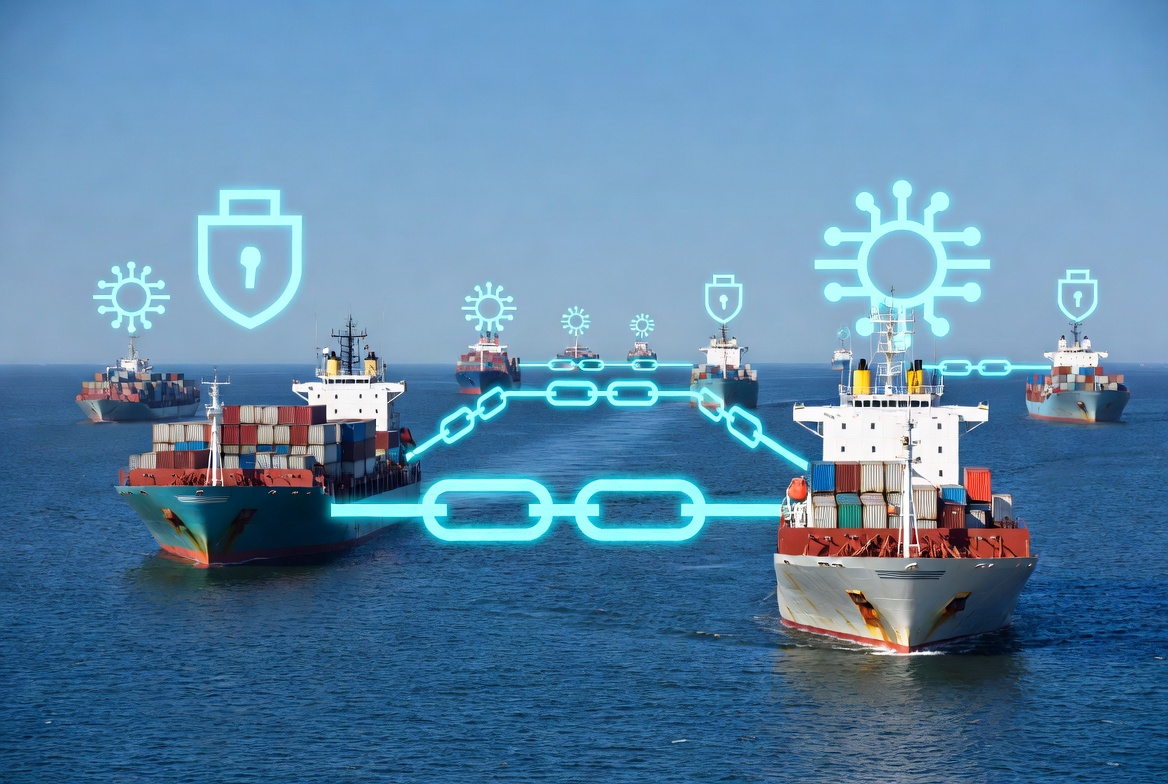
This approach does not require any party to fully surrender its legal position. Instead, it creates operational trust through immutable and transparent records — something traditional diplomacy has struggled to achieve consistently.
Moving Past the Current Impasse
Neither unilateral territorial claims nor external demands for “protection money” will produce a stable, long-term solution. A blockchain-enabled framework allows stakeholders to operate under clear, auditable rules rather than competing unilateral actions.
The technology to support verifiable, rules-based cooperation already exists. What is needed is the willingness to apply it to one of the world’s most strategically important maritime chokepoints.

About the Author: This article was contributed by a Guest Contributor with expertise at the intersection of maritime security, international relations, and emerging technology.
Disclaimer: The views expressed are those of the author and do not necessarily reflect the official policy of any organization.
Published by
UN Blockchain Week
News, analysis and updates from the team behind UN Blockchain Week.